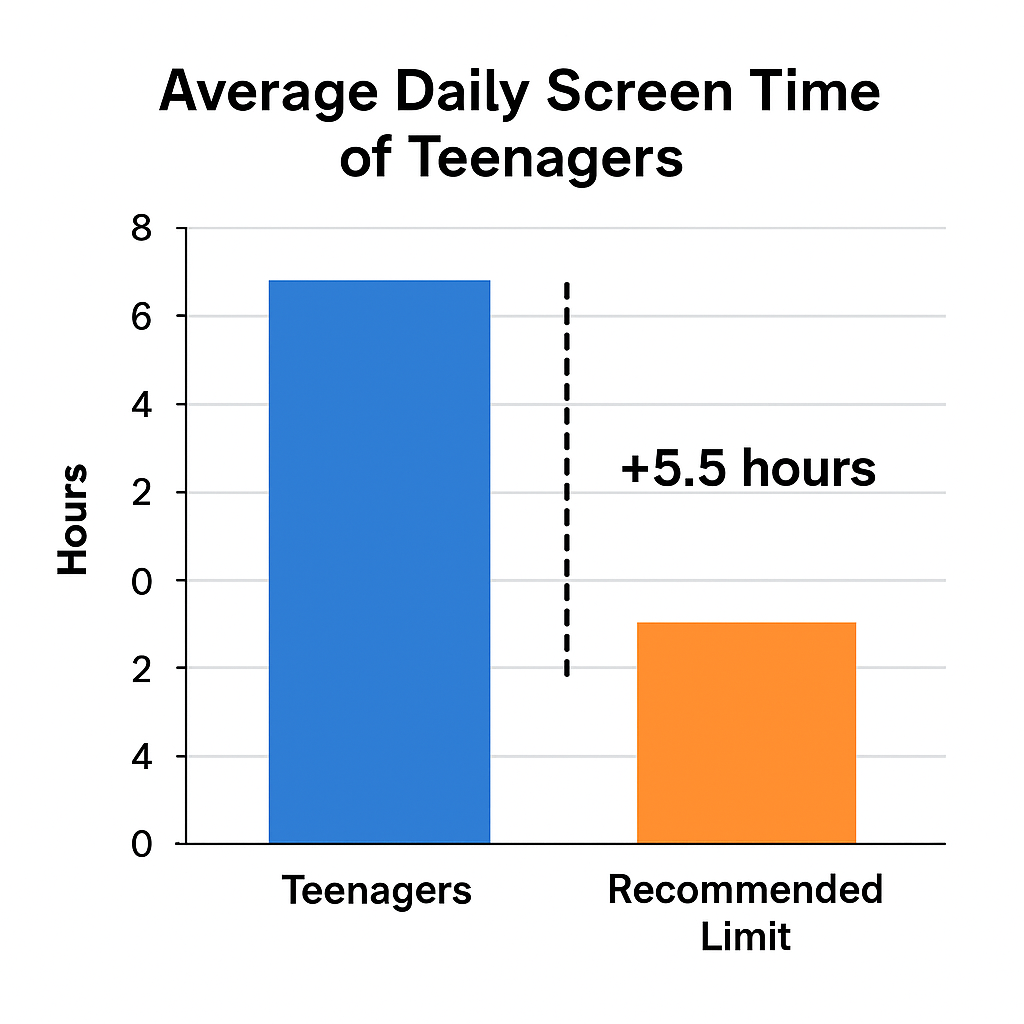
The Digital Native Generation: Beyond Basic Device Usage
Teens today have grown up with smartphones, tablets, and constant connectivity as the default state of existence. Unlike previous generations who adopted technology as adolescents or adults, today’s teenagers have never known a world without screens. This fundamental difference shapes how we need to think about screen time and mental health—it’s not about demonizing technology, but understanding how the specific patterns of use affect developing brains and emotional wellbeing.
The challenge isn’t that screens are inherently harmful. The challenge is that teen brains are still developing impulse control, emotional regulation, and sleep architecture, while the apps and platforms they’re using are literally designed to be as engaging and habit-forming as possible. That’s a mismatch worth taking seriously.
When Willpower Isn’t Enough: The Case for External Boundaries
Most teens I work with understand intellectually that late-night scrolling tanks their sleep and mood—but understanding and doing are separated by the gap where willpower lives, and willpower is the first thing exhaustion kills. A physical barrier that removes the negotiation entirely can be the difference between another sleepless night of doom-scrolling and actual rest.
This is where many parents get stuck. They assume that talking to their teen about healthy screen habits, setting rules, or even having their teen agree to limits will be enough. And for some teens, it is. But for many—particularly those struggling with anxiety, depression, or compulsive use patterns—willpower simply isn’t going to cut it at 11 p.m. when the brain is flooded with cortisol and dopamine-seeking impulses.
What works
- Eliminates the nightly power struggle—once the device goes in, it’s not about your teen’s discipline or your enforcement, it’s just a fact of the environment. I’ve seen this shift reduce resentment significantly.
- Protects sleep architecture without relying on self-regulation during the highest-impulse hours. The anxiety and dopamine-seeking that happens at 11 p.m. is neurologically different from afternoon decision-making, so external structure actually respects teen neurobiology instead of fighting it.
- Works regardless of your teen’s motivation level or current mental state. On days when depression or anxiety is heaviest, they don’t have to summon willpower they don’t have—the boundary is already there.
- Reduces the mental load for both parent and teen. Instead of daily negotiations, reminders, or enforcement, there’s simply a non-negotiable boundary. This can paradoxically feel more respectful than constant monitoring or nagging.
What doesn’t
- It doesn’t address the underlying urge to escape, numb, or connect—which often points to loneliness, anxiety, or boredom that needs attention separately. A lock box is a tool, not therapy.
- Requires genuine buy-in from parents to enforce consistently, and in families where the parent-teen relationship is already fractured or where there’s inconsistent rule-setting, it can escalate conflict if introduced without conversation and agreement.
- Won’t help if the underlying issue is social media use during the day, cyberbullying, or exposure to harmful content. Nighttime boundaries are just one piece of a larger picture.
The Bigger Picture: What Screen Time Actually Replaces
I do sometimes worry that recommending a Mindsight Timed Lock Box can feel like I’m naming a quick fix to what’s often a symptom of something deeper—so I always pair this recommendation with a conversation about what the screen time is replacing or avoiding.
Is your teen scrolling because they’re genuinely interested in the content, or because they’re anxious about tomorrow’s test? Are they connecting with friends, or numbing loneliness? Are they decompressing from a stressful day, or avoiding a conversation that needs to happen? The screen time itself is often just the visible symptom. The real work involves understanding and addressing what’s underneath.
This might mean family conversations about stress, individual therapy to build coping skills, or simply creating more opportunities for offline connection and activity. It might mean addressing your own screen habits, since teens are incredibly perceptive about hypocrisy. And it definitely means approaching this with curiosity rather than shame or blame.
Moving Forward
If you’re concerned about your teen’s screen time and mental health, start by observing without judgment: What time of day is use heaviest? What happens before and after? How does their mood, sleep, and in-person relationships correlate with their screen habits? Then have a real conversation—not a lecture—about what might help. External boundaries can be powerful tools when used thoughtfully, but they work best as part of a broader approach that addresses the emotional needs underneath.
About This Article

Written by Sarah Mitchell. Sarah Mitchell isn't a therapist. She got interested in how the mind works after her own struggle with anxiety in her twenties, and has spent 16 years since then reading and personally testing cognitive behavioural therapy (CBT), acceptance and commitment therapy (ACT), and attachment-based approaches. Her writing combines that research with genuine compassion for how hard mental health struggles actually are. More about this site.
Scope and limits. Sarah is not a licensed therapist or clinician, and nothing here is a substitute for care. If you are in crisis or thinking about harming yourself, call or text 988 in the US to reach the Suicide & Crisis Lifeline.
Verify this against a primary source
Specifics change, and your situation may differ from the one described here. These are the authorities worth checking directly:
- NIMH — mental health research and condition information
- SAMHSA — treatment locator and the 988 Suicide & Crisis Lifeline
- American Psychological Association — evidence-based practice guidance