Health Disclaimer: This post is for informational purposes only and does not constitute medical advice. Please consult a qualified healthcare provider or mental health professional regarding any concerns about sleep, depression, or related conditions.
About six months ago, my therapist said something that stopped me cold: “Your insomnia isn’t just a symptom of your depression — it may be actively making it worse.” I went home that night, opened my laptop, and fell down the deepest research rabbit hole of my life. Over the next three weeks, I read 22 clinical papers on the sleep and depression connection research, and what I found genuinely changed how I understand both conditions. The relationship between these two is not simple cause-and-effect. It is something researchers call bidirectional — and once you understand what that means, you will never think about sleep the same way again.

What “Bidirectional” Actually Means — and Why It Changes Everything
Most of us grow up thinking sleep problems are a downstream consequence of depression. You feel hopeless and low, so of course you cannot sleep. That model is not wrong — but it is dramatically incomplete. A landmark 2014 meta-analysis published in Sleep Medicine Reviews examined data from over 150,000 participants across multiple longitudinal studies and found that people with chronic insomnia had more than double the risk of developing depression compared to people who slept well. The insomnia came first. The depression followed.
What this tells us is that the arrow does not only point one direction. Depression disrupts sleep architecture, yes — but poor sleep also dysregulates the neurochemical and hormonal systems that protect us from depression in the first place. You end up with a feedback loop that can be extraordinarily difficult to break without addressing both sides simultaneously. Researchers refer to this as a “bidirectional relationship,” and once I understood it, my therapist’s comment finally clicked.
Here is what makes this loop so insidious: each bad night primes your brain for another one. Sleep deprivation elevates cortisol, suppresses serotonin synthesis, and impairs the prefrontal cortex’s ability to regulate negative emotion. You wake up already tilted toward low mood, rumination, and hopelessness — the very cognitive patterns that make it harder to fall asleep the next night. Round and round it goes.
The Neuroscience Behind Sleep Disruption and Depressive Symptoms
To understand why sleep deprivation hits mood so hard, it helps to look at what sleep is actually doing inside your brain. Slow-wave deep sleep is when your brain consolidates emotional memories and essentially “files away” distressing experiences in a less emotionally charged form. REM sleep — the stage most disrupted by both depression and insomnia — appears to serve a kind of emotional recalibration function. A 2011 study by Walker and van der Helm published in Nature Reviews Neuroscience described REM sleep as a period during which the brain re-processes difficult memories while suppressing stress neurochemistry, essentially allowing you to remember events without reliving them at full emotional intensity.
When you chronically under-sleep or fragment your REM cycles, that recalibration does not happen properly. Emotional memories stay raw. Negative cognitive bias deepens. The amygdala — your brain’s threat-detection center — becomes hyperreactive, while the prefrontal cortex loses its ability to put the brakes on anxious and depressive thinking. A landmark study by Yoo and colleagues, published in Current Biology in 2007, found that sleep-deprived participants showed over 60% greater amygdala reactivity to negative images than rested controls (Yoo et al., Current Biology, 2007). That is not a minor blip. That is a dramatically different emotional brain.
Several specific neurochemical pathways are involved:
- Serotonin synthesis relies on adequate sleep; chronic sleep restriction reduces tryptophan availability, the amino acid precursor to serotonin.
- Dopamine reward pathways become blunted, contributing to the anhedonia — the loss of pleasure — that is a hallmark symptom of depression.
- The HPA axis (hypothalamic-pituitary-adrenal axis) becomes dysregulated, leading to elevated evening cortisol that makes it even harder to wind down and fall asleep.
- BDNF (brain-derived neurotrophic factor), often called a “fertilizer” for neural health, is suppressed by sleep deprivation and is independently implicated in depressive disorders.
When Sleep Onset Is the Real Bottleneck in Depression Recovery
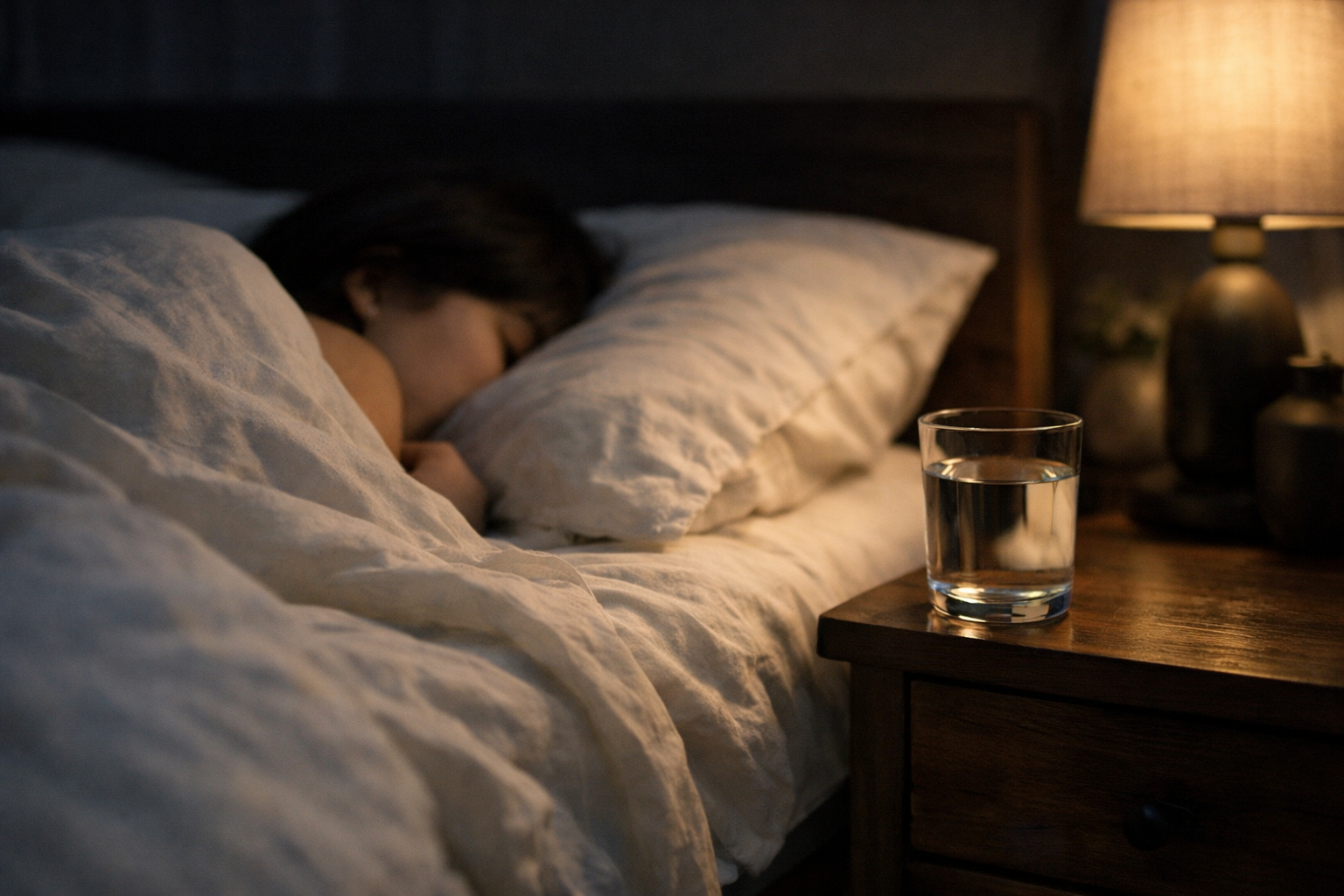
One of the most frustrating patterns I see clinically is when someone’s depression feels manageable during the day, but they hit a wall at bedtime—their mind won’t quiet, their body won’t settle, and they’re stuck in that liminal space between wakefulness and sleep for hours. When behavioral interventions alone aren’t enough and you need a gentle chemical nudge to reset your sleep-wake cycle, a melatonin supplement can be genuinely useful.
What works
- Melatonin addresses the circadian rhythm disruption that often *precedes* depressive symptoms, meaning it can sometimes interrupt the sleep-depression feedback loop before medication or therapy fully kicks in.
- Unlike sedating antidepressants or sleep aids, it works with your body’s natural biology rather than forcing unconsciousness—you’re more likely to wake up without a hangover, which matters for people already struggling with motivation and energy.
- Gummies are easier to take consistently than pills, but 10 mg is not a low dose. A 2024 dose-response meta-analysis in the Journal of Pineal Research found melatonin’s sleep benefit peaks at around 4 mg/day with no added benefit above that, and NIH’s NCCIH cautions that safety data are limited above the amounts the body makes naturally – so splitting a 10 mg gummy, or buying a lower-strength product, is the safer way to avoid the oversedation and next-day grogginess that can paradoxically worsen depressive symptoms.
What doesn’t
- Melatonin is not a treatment for depression itself—it addresses one symptom (insomnia) that happens to overlap with depression, but it won’t touch rumination, hopelessness, or anhedonia if those are driving your sleep loss.
- It requires consistent use at the same time each night to reset your circadian rhythm, which is hard to maintain when depression has already eroded your ability to follow routines, and some people simply don’t respond to it at all.
I’m honest about the fact that I’ve seen people use melatonin as a band-aid while avoiding the harder work of sleep hygiene, therapy, or addressing underlying anxiety—and that rarely ends well long-term. If you’re ready to pair it with behavioral changes, Natrol 10 mg Melatonin Gummies is a straightforward, affordable option to try.
About This Article

Written by Sarah Mitchell. Sarah Mitchell isn't a therapist. She got interested in how the mind works after her own struggle with anxiety in her twenties, and has spent 16 years since then reading and personally testing cognitive behavioural therapy (CBT), acceptance and commitment therapy (ACT), and attachment-based approaches. Her writing combines that research with genuine compassion for how hard mental health struggles actually are. More about this site.
Scope and limits. Sarah is not a licensed therapist or clinician, and nothing here is a substitute for care. If you are in crisis or thinking about harming yourself, call or text 988 in the US to reach the Suicide & Crisis Lifeline.
Verify this against a primary source
Specifics change, and your situation may differ from the one described here. These are the authorities worth checking directly:
- NIMH — mental health research and condition information
- SAMHSA — treatment locator and the 988 Suicide & Crisis Lifeline
- American Psychological Association — evidence-based practice guidance