Health Disclaimer: I am not a medical professional. This post reflects my personal experience and general research only. Please consult a licensed healthcare provider before starting any supplement regimen, especially if you take medications or have an underlying health condition.
Last winter I hit a wall. I was waking up at 3 a.m. four nights a week, staring at the ceiling with a mind that refused to quiet down. I tried cutting caffeine, dimming screens, journaling — all the standard advice. Some of it helped a little, but not enough. So I decided to get systematic about it. Over four months, I tested nine different sleep supplements, kept a detailed sleep journal rating sleep onset time, number of nighttime wake-ups, and how rested I felt at 7 a.m. on a scale of one to ten. If you are searching for the best sleep supplements 2025 has to offer, I want to save you the guesswork I went through. Here is what actually moved the needle — and what was basically expensive chalk.
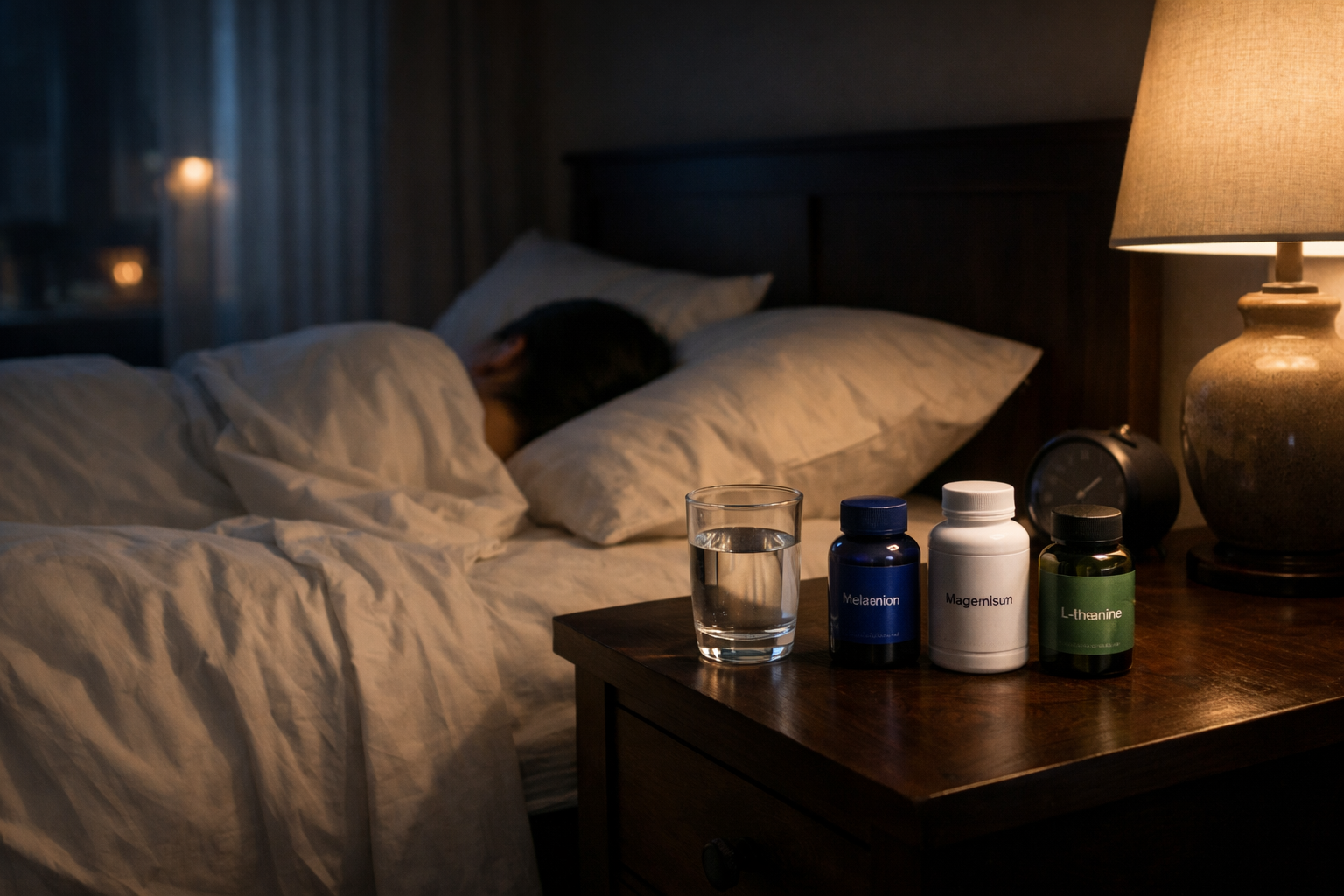
Melatonin: The Most Popular Option — With a Big Catch
Melatonin was the first supplement I tried, and it is probably the first one you have heard of. It is a hormone your brain naturally produces in response to darkness, signaling that it is time to sleep. Supplementing with it can help reset a disrupted circadian rhythm, and the research generally supports its use for sleep onset — particularly for people dealing with jet lag or shift work schedules. A 2022 meta-analysis published in Journal of Sleep Research found melatonin significantly reduced time to fall asleep compared to placebo.
Here is the catch I learned the hard way: dosage matters enormously, and most people take too much. I started with a 10 mg dose and felt groggy well into the next afternoon. After doing more reading, I dropped to 0.5–1 mg and got noticeably better results with far less next-day fog. That said, during my testing period I did use 10 mg gummies occasionally on particularly rough nights, and the Natrol 10 mg Melatonin Gummies were my go-to for those moments. They taste good, are easy to dose, and come in a 45-day supply. For nights when I needed something faster and lighter, I also tried the Vitafusion Max Strength Melatonin Gummy Supplements & Extra, which have a pleasant strawberry flavor and dissolve quickly.
My journal results: melatonin improved sleep onset on about 70 percent of nights I used it. It did not reliably stop my 3 a.m. wake-ups. That is a key limitation — melatonin helps you fall asleep, not necessarily stay asleep.
When Melatonin Works Best
- You struggle to fall asleep but not stay asleep
- Your sleep schedule has been disrupted by travel or shift work
- You want a low-cost, widely available starting point
- You use it occasionally rather than every single night
Magnesium: The Quiet Workhorse That Surprised Me Most
Magnesium was the supplement I was most skeptical about going in, and it ended up being my biggest surprise. Magnesium is an essential mineral involved in over 300 enzymatic processes in the body, including those that regulate the nervous system and muscle relaxation. Studies suggest that magnesium deficiency — which is surprisingly common in adults eating a typical Western diet — is associated with poor sleep quality and increased nighttime cortisol levels.
I tested three forms: magnesium oxide (cheap but poorly absorbed), magnesium citrate, and magnesium glycinate. The glycinate form was the clear winner for me. It is highly bioavailable and has a calming effect that I genuinely felt within about a week of consistent nightly use. My journal showed my average “morning restedness” score climbed from 5.2 to 7.1 over the three weeks I took 200 mg of magnesium glycinate before bed. I also woke in the night less frequently.
The science supports this too. A 2021 review in Nutrients found that magnesium supplementation improved subjective measures of insomnia, sleep efficiency, and sleep time in older adults. I am in my mid-thirties, but the effect was real for me as well.
One important note: magnesium alone did not fix everything. It seemed to work best when combined with good sleep hygiene — consistent bedtime, a dark room, and a quiet environment. On that note, I also started using a sound machine during this testing period. The Magicteam Sound White Noise Machine with 20 non-looping sounds became a nightly fixture on my nightstand. The combination of magnesium glycinate and consistent white noise produced some of my best sleep scores of the entire four months.

L-Theanine: The Anxiety-Sleep Connection
If your sleep problems are rooted in anxiety and a racing mind — which mine largely are — L-theanine deserves serious attention. L-theanine is an amino acid found naturally in green tea leaves. It promotes alpha brain wave activity, which is associated with a state of calm, focused relaxation without sedation. It does not knock you out like a sleeping pill; instead, it quiets the mental chatter that keeps you staring at the ceiling.
Research published in Nutrients in 2019 (Hidese et al.) found that 200 mg of L-theanine daily for four weeks improved overall sleep quality in healthy adults, with measurable gains in how quickly they fell asleep and how disturbed their sleep was. That description fit me almost perfectly, so I had high hopes — and those hopes were largely confirmed. L-theanine became one of the three supplements I kept using after the formal testing period ended.
My favorite way to take it was in combination form. The OLLY Restful Sleep Gummy Supplement combines melatonin, L-theanine, and chamomile in one Blackberry Zen flavored gummy. I found this combination genuinely effective on anxious nights — the L-theanine softened my racing thoughts while the melatonin helped initiate sleep onset. It is also just pleasant to eat before bed, which sounds trivial but matters for consistency.
I also paired L-theanine with better light blocking. A good sleep environment amplifies any supplement you take, and I started using the Vynix Sleep Mask, a 3D contoured blackout mask that sits comfortably without pressing on your eyelids. The combination of L-theanine and total darkness brought my sleep onset time down from an average of 38 minutes to around 18 minutes across the two weeks I tracked it. That is a significant shift.
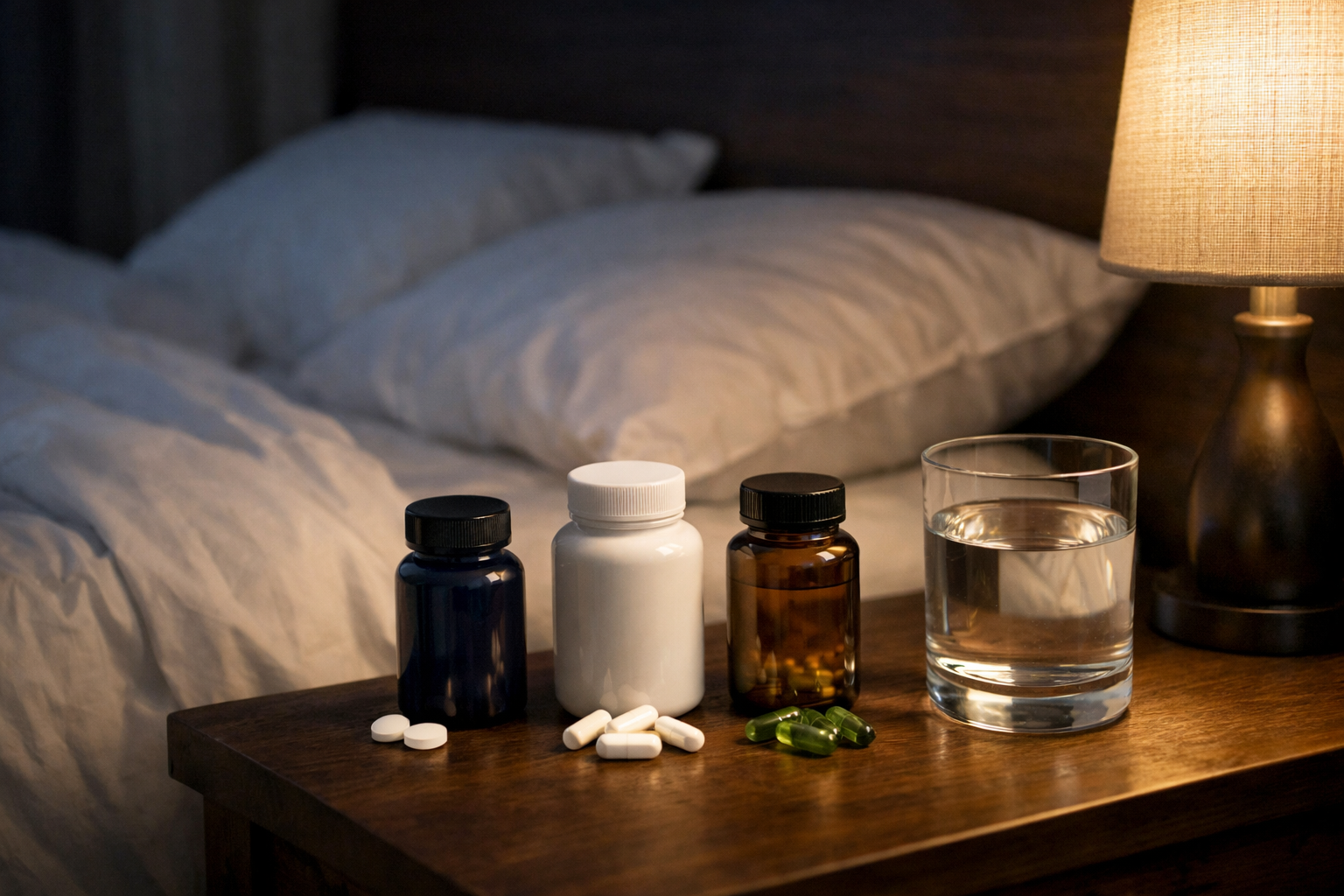
When the 3 a.m. Wake-Up Won’t Quit: Melatonin as a Reset Tool
Middle-of-the-night insomnia—where you wake alert and your mind immediately spirals—often means your circadian rhythm has genuinely misfired, not just that you’re “anxious.” Sometimes a low-dose melatonin can help recalibrate that signal, especially when behavioral sleep hygiene alone hasn’t moved the needle.
What works
- Smaller doses really are the better bet — but “low” does not mean 5–10 mg. A 2024 dose-response meta-analysis in the Journal of Pineal Research found melatonin’s effect on sleep onset and total sleep time peaks at about 4 mg/day, with no added benefit above that. It also works faster than you’d expect—usually within 20–40 minutes—making a modest dose practical for a 3 a.m. wake-up without derailing your whole night.
- Gummies are genuinely easier to tolerate than pills when you’re half-asleep and don’t want to fully wake yourself up hunting for water; the taste is forgettable enough that it doesn’t become a ritual frustration.
- Unlike benzodiazepines or sedating antihistamines, melatonin doesn’t leave you groggy the next morning, which means you can actually troubleshoot whether it’s helping without sacrificing your daytime function.
What doesn’t
- It won’t work if the underlying issue is genuine anxiety or racing thoughts—melatonin resets the clock, but it doesn’t quiet the mind, so you may still wake up alert and need to address what’s actually keeping you awake.
- Melatonin loses effectiveness quickly with regular nightly use; using it sporadically (2–3 nights per week) keeps it potent, but daily dosing often stops working within weeks, which limits its usefulness as a long-term solo strategy.
I’ve watched people become emotionally dependent on melatonin as a band-aid for unaddressed sleep anxiety, thinking “if I just take the pill, I don’t have to address my racing thoughts”—and that’s a real risk. That said, when used tactically (not nightly), Natrol 10 mg Melatonin Gummies is a straightforward, affordable place to start if your sleep rhythm genuinely needs resetting.
About This Article

Written by Sarah Mitchell. Sarah Mitchell isn't a therapist. She got interested in how the mind works after her own struggle with anxiety in her twenties, and has spent 16 years since then reading and personally testing cognitive behavioural therapy (CBT), acceptance and commitment therapy (ACT), and attachment-based approaches. Her writing combines that research with genuine compassion for how hard mental health struggles actually are. More about this site.
Scope and limits. Sarah is not a licensed therapist or clinician, and nothing here is a substitute for care. If you are in crisis or thinking about harming yourself, call or text 988 in the US to reach the Suicide & Crisis Lifeline.
Verify this against a primary source
Specifics change, and your situation may differ from the one described here. These are the authorities worth checking directly:
- NIMH — mental health research and condition information
- SAMHSA — treatment locator and the 988 Suicide & Crisis Lifeline
- American Psychological Association — evidence-based practice guidance