I was sitting in a coffee shop when my sister mentioned her ex-partner’s latest stint in rehab. We’d known him for years — bright, funny, capable of real kindness. And completely consumed by alcohol. I remember feeling the familiar frustration rising: Why can’t he just stop? What’s wrong with him?
I didn’t ask that question out of cruelty. I asked it because I genuinely didn’t understand. Addiction felt like a choice wrapped in weakness, a moral failing dressed up as disease. Then I read Gabor Maté’s In the Realm of Hungry Ghosts, and everything shifted.
For two decades, Dr. Maté worked as a physician in Vancouver’s Downtown Eastside — one of the most concentrated populations of drug users and people experiencing homelessness in North America. His work with thousands of people struggling with addiction led him to a conclusion that contradicts almost everything our culture believes about drugs and dependence: addiction is not primarily about the drug. It’s about the pain.
This isn’t soft thinking or excuse-making. It’s one of the most compassionate, evidence-based understandings of Gabor Maté addiction I’ve encountered — and it changed how I relate to the people I love who struggle.
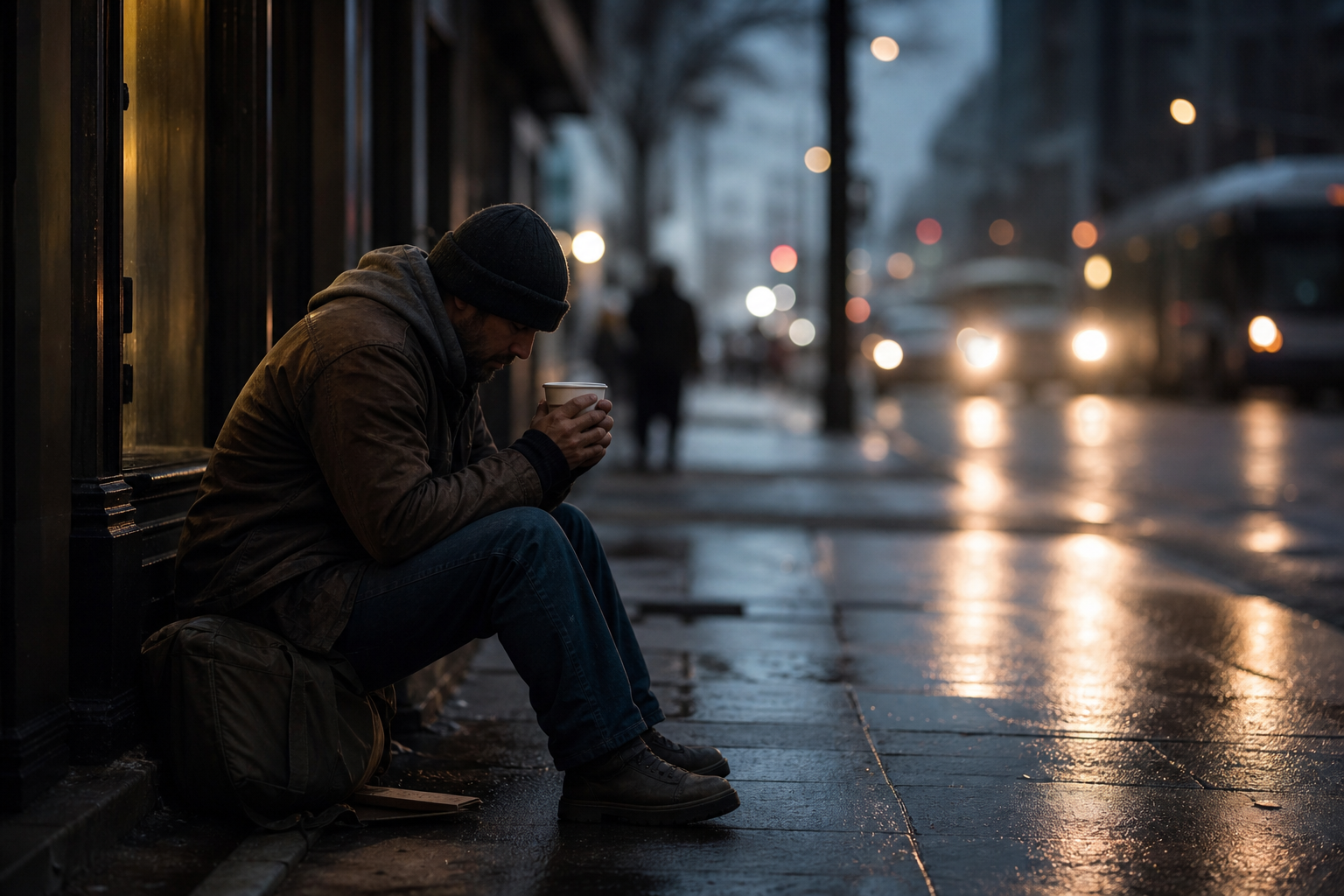
Who Were Gabor Maté’s Patients? The Downtown Eastside Years
To understand Maté’s perspective on addiction, you need to understand the people he worked with. The Downtown Eastside of Vancouver is a neighbourhood of extremes: some of the lowest real estate prices in Canada sit alongside some of the highest concentrations of addiction, homelessness, and untreated mental illness.
Maté spent years there as a street clinic physician, seeing hundreds of patients daily. He prescribed medication. He treated infections and overdoses and preventable diseases. But what struck him most wasn’t the drugs — it was the stories.
Without exception, nearly every person he worked with had suffered severe childhood trauma. Not most. Not many. Nearly every one.
- Abuse — physical, sexual, emotional
- Neglect and abandonment
- Witness to violence
- Loss and grief without support
- Disconnection from safe, stable adults during crucial developmental years
The pattern was so consistent that Maté began asking a different question than the one most of us ask. We tend to ask: Why did they start using? Or worse: Why can’t they stop?
Maté asked: Why the pain that drove them to seek relief in the first place?
“The Question Is Not Why the Addiction, But Why the Pain”
This might be the most important sentence ever written about addiction. Let it sit for a moment.
“The question is not why the addiction, but why the pain.”
This single reframing changed everything for me — and it’s the core of Gabor Maté’s understanding of addiction.
We live in a culture obsessed with substance. We focus on the drug — cocaine, alcohol, opioids, benzodiazepines. We ask: What chemical properties make this addictive? What does it do to the brain? How do we prevent access? These are valid questions, but they miss something fundamental.
The drug is not the problem. The drug is the solution — or at least, the person using it believes it is.
When someone reaches for a substance, they’re reaching for relief. Relief from what? From pain. Physical pain, certainly. But more often: emotional pain. Psychological pain. The unbearable weight of trauma that’s been carried since childhood, often without words to describe it or support to process it.
The addiction isn’t the disease. The pain is. The addiction is a symptom — and a remarkably logical one, actually. If you’ve been hurt deeply and no one helped you process that hurt, and then you discover something that makes the hurt stop, even temporarily, why wouldn’t you reach for it again?

The Hungry Ghost: What Addiction Is Actually Trying to Fill
Maté borrowed a concept from Tibetan Buddhism to explain the mechanism of addiction. In Buddhist cosmology, hungry ghosts are tormented beings with enormous, hollow bellies and tiny mouths. They’re perpetually, insatiably hungry — no matter how much they consume, they can never feel full.
It’s a perfect metaphor for addiction.
An addict is trying to fill something that cannot be filled with substances. They’re trying to medicate an absence — usually the absence of secure attachment, safety, and unconditional acceptance in early childhood. That’s not a physical void. No amount of heroin or alcohol or gambling or shopping will ever truly fill it.
But the substance temporarily numbs the pain of the void. So the person uses again. And again. Chasing not the high (though that’s part of it) but the relief from the ache underneath.
This is why addiction is so persistent and so often misunderstood. It’s not that addicts lack willpower. It’s that they’re trying to solve a relational problem — an absence of secure human connection — with a chemical solution. The math doesn’t work. The substance can never do what only genuine connection can do: make a person feel safe, seen, and worthy of love.
Until we address the hunger beneath the hunger, we’re asking people to give up their primary coping mechanism without offering them anything to replace it.
Childhood Trauma and Addiction — The Data Is Undeniable
Maté’s clinical observations aren’t just anecdotal. They’re backed by rigorous epidemiological research.
The ACE (Adverse Childhood Experiences) study, conducted by the Centers for Disease Control and Kaiser Permanente, followed thousands of people and measured their exposure to childhood trauma. The results were striking: childhood trauma is the single strongest predictor of adult addiction — stronger than genetic factors alone.
People with four or more ACEs (adverse childhood experiences) are:
- 7–10 times more likely to struggle with substance abuse
- Significantly more likely to experience depression, anxiety, and suicide attempts
- At higher risk for virtually every major health condition
This isn’t moral weakness. This isn’t character deficiency. This is neurobiology. When a child experiences chronic stress and threat without adequate buffering from a safe adult, their nervous system develops differently. Their ability to self-regulate, to feel safe in their body, to trust others — these are fundamentally shaped by early experience.
Add substance use to that mix, and you’ve got someone whose brain has learned to associate relief with a chemical intervention. The neural pathways are real. The trauma is real. The “choice” to stop using becomes vastly more complicated than simply deciding to be better.

Maté’s Own Addiction — Why That Matters
Here’s what makes Gabor Maté’s work uniquely powerful: he refuses to separate “people like us” from “people like them.”
Maté himself is a recovering addict.
His addiction wasn’t to heroin or alcohol. It was to buying CDs — compulsively, obsessively, spending thousands of dollars, lying to his family about his purchases. He experienced the same loss of control, the same shame spiral, the same inability to stop despite genuine consequences that any person struggling with addiction experiences.
Why CDs? Because buying them temporarily soothed his anxiety. Because he’d learned as a child to suppress his emotions and needs, and objects became a way to self-medicate. Because no one helped him feel fundamentally safe and accepted.
The mechanism was identical to his patients on the Downtown Eastside. The substance was different. The socioeconomic context was different. But the underlying pain and the attempt to fill it? The same.
This personal transparency is crucial. It means Maté isn’t writing from a position of clinical distance or superiority. He’s writing as someone who understands addiction from the inside — someone who’s faced his own demons and asked himself the hard questions about why the pain was there in the first place.
Judgment vs Compassion: What Actually Helps
Our culture is built on the assumption that shame and judgment motivate change. If we just shame people enough, stigmatize addiction enough, make them feel bad enough about their choices, they’ll stop.
It doesn’t work. In fact, it makes things worse.
Shame deepens pain. Judgment increases isolation. When a person struggling with addiction internalizes the message that they’re fundamentally flawed, fundamentally bad, that becomes part of the internal landscape they’re trying to escape. So they use more.
Maté advocates for harm reduction — a controversial but deeply compassionate approach. Instead of demanding immediate abstinence, harm reduction means:
- Meeting people where they are, not where we think they should be
- Keeping them alive first (through supervised injection sites, needle exchanges, medication-assisted treatment)
- Building trust and relationship before making demands
- Addressing the trauma and pain underneath the addiction
This isn’t permissive. It’s strategic. You can’t heal the wound if the person is dead. You can’t address trauma if someone is acutely in crisis. You can’t rebuild a life if you’re completely isolated by shame.
What actually opens the door to change is the opposite of judgment. It’s compassion. Understanding. The simple act of asking “why the pain?” instead of “why the addiction?”
When my sister’s ex-partner finally got sober — actually sober, sustainably — it wasn’t because someone yelled at him or gave him an ultimatum. It was because he found a therapist who asked about his childhood. Who helped him understand that his drinking was an attempt to quiet the voice of a 7-year-old boy whose father had abandoned him. Who treated him with dignity instead of disdain.
The substance was the symptom. The childhood abandonment was the disease. You have to treat the disease.

What This Means for How We Think About Addiction
Reading Maté’s work — both In the Realm of Hungry Ghosts and his more recent The Myth of Normal — shifted something fundamental in how I relate to addiction. Not just intellectually, but emotionally.
I moved from frustrated incomprehension to genuine understanding. I stopped asking “why can’t he just stop?” and started asking “what pain was he trying to escape?”
That shift doesn’t excuse addiction. It doesn’t remove consequences or responsibility. But it does open a door to compassion — both for the people we love who struggle and for ourselves if we’re struggling.
If you’re navigating addiction — your own or someone else’s — I’d urge you to read In the Realm of Hungry Ghosts: Close Encounters with Addiction. It’s not always easy reading. Maté includes detailed patient stories that are sometimes graphic and often heartbreaking. But it’s necessary reading. It reframes addiction not as a moral failing but as a logical response to pain.
The Myth of Normal is excellent too — it expands Maté’s thinking to consider how trauma and disconnection underlie not just addiction but virtually all mental and physical illness in modern culture.
These books won’t fix addiction. But they might help you understand it. And understanding, truly understanding, is where compassion begins.
— Sarah
The Book That Reframes Addiction as a Symptom, Not a Moral Failure
If you’re trying to understand addiction—whether your own or someone you care about—you’re probably carrying shame, confusion, or anger about why the person “just won’t stop.” Maté’s clinical framework directly challenges that question and offers something genuinely different: a way to see addiction not as weakness, but as a response to unbearable disconnection and unresolved pain.
What works
- Case studies from his work in Vancouver’s Downtown Eastside show real addiction in real people—not theory divorced from lived suffering. You stop asking “why don’t they quit” and start asking “what pain is this numbing?”
- The neurobiology is accessible without being dumbed down. Maté explains how trauma literally changes the brain’s reward and stress-regulation systems, which makes relapse feel less like a character flaw and more like a biological reality you’re actually dealing with.
- It works for families and loved ones too—if you’re watching someone struggle, this book gives you language to shift from blame to compassion without becoming codependent or enabling.
What doesn’t
- Understanding addiction’s roots doesn’t automatically lead to recovery. Some readers finish the book feeling more compassionate but no clearer on practical next steps—the “what now?” question lingers.
- It doesn’t replace treatment, therapy, or medical support. Maté’s framework is powerful context, but it’s not a substitute for actual recovery work, detox, or professional intervention when someone is actively addicted.
I sometimes worry that compassionate understanding can become a way to avoid the harder work of setting boundaries or insisting on professional help—and Maté’s writing, for all its wisdom, doesn’t always address that tension directly. Still, if you need to shift from judgment to clarity about what addiction really is, In the Realm of Hungry Ghosts: Close Encounters with Addiction is worth your time.
More From This Series
- The Myth of Normal: How Gabor Maté Argues Society Itself Makes Us Sick
- What Is Gabor Maté’s Compassionate Inquiry — and Can You Use It on Yourself?
- Gabor Maté on Parenting: Why Children Need Parents, Not Peers
About This Article

Written by Sarah Mitchell. Sarah Mitchell isn't a therapist. She got interested in how the mind works after her own struggle with anxiety in her twenties, and has spent 16 years since then reading and personally testing cognitive behavioural therapy (CBT), acceptance and commitment therapy (ACT), and attachment-based approaches. Her writing combines that research with genuine compassion for how hard mental health struggles actually are. More about this site.
Scope and limits. Sarah is not a licensed therapist or clinician, and nothing here is a substitute for care. If you are in crisis or thinking about harming yourself, call or text 988 in the US to reach the Suicide & Crisis Lifeline.
Verify this against a primary source
Specifics change, and your situation may differ from the one described here. These are the authorities worth checking directly:
- NIMH — mental health research and condition information
- SAMHSA — treatment locator and the 988 Suicide & Crisis Lifeline
- American Psychological Association — evidence-based practice guidance