This post contains affiliate links. As an Amazon Associate I earn from qualifying purchases at no extra cost to you.
I spent months convinced something was seriously wrong with my heart. Every palpitation, every flutter of chest tightness sent me spiralling into a full-blown Google session at midnight, convinced I was about to have a heart attack at twenty-five. Health anxiety symptoms had completely taken over my life — and the worst part? I had no idea that was even what was happening. I thought I was just being sensible. Vigilant. Thorough. Turns out, I was exhausting myself chasing a medical diagnosis that didn’t exist.
If any of that sounds familiar, I want you to know: you are not dramatic, you are not “crazy,” and you are definitely not alone. Health anxiety is far more common than people admit out loud. And navigating that line between genuine concern about your body and anxiety-driven worry? It is genuinely one of the hardest things to do.

What Is Health Anxiety, Really?
Health anxiety — sometimes still referred to in clinical circles as illness anxiety disorder or, in older literature, hypochondria — is not simply being a bit of a hypochondriac. That word carries so much unfair baggage. What health anxiety actually involves is persistent, excessive worry that you have or will develop a serious illness, even when medical tests come back clear or reassurance is given.
The NHS describes it as when worry about your health is significantly affecting your life, even when there is no medical evidence to support your fears. Research published in journals like Psychological Medicine suggests that health anxiety affects around 4 to 5 percent of the general population, though many researchers believe the true figure is higher because so many people never seek help for it specifically.
Something I have noticed in my own experience — and in the years I have spent writing and researching anxiety — is that health anxiety tends to latch onto whatever feels most threatening in that season of your life. For me, it was cardiac symptoms during a particularly stressful period. For others, it might be a fear of cancer, neurological illness, or anything they have recently read about or seen in the news. The theme changes; the underlying anxiety does not.
Common Health Anxiety Symptoms to Recognise
One of the trickiest things about health anxiety symptoms is that they are real. Your chest really does tighten. Your head really does pound. Anxiety is incredibly physical, and that physical reality can make it almost impossible to trust yourself. Here are some patterns that often point toward anxiety rather than an underlying medical issue:
- Symptoms that shift or move — you fix your focus on one area and the worry migrates to another
- Reassurance-seeking that only helps temporarily, then the cycle starts again
- Compulsive body-checking — feeling your neck for lumps, monitoring your pulse constantly
- Avoiding medical information because it makes things worse, or seeking it obsessively — both are common
- Symptoms that worsen when you are stressed or anxious and ease when you are genuinely distracted
- A pattern of clear test results followed by fresh worry rather than relief
I remember sitting in my GP’s waiting room for the third time in six weeks, certain this time they would find something. They didn’t. And instead of feeling relieved, I felt suspicious. That, I now know, is a hallmark of health anxiety — the inability to accept reassurance as final.

So When Should You Actually See a Doctor?
Here is where I want to be really honest with you, because I think a lot of anxiety content glosses over this part. Please do not use a health anxiety framework to talk yourself out of genuine medical concerns. I am not a doctor — I am a psychology graduate and a mental health blogger — and I would never want anyone to dismiss a real symptom because they assumed it was “just anxiety.”
There are real red flags that warrant a GP visit regardless of your anxiety history. These include unexplained weight loss, blood where there should not be any, a lump or swelling that appears without explanation, persistent pain that does not resolve, or symptoms that are genuinely new and not part of your established anxiety pattern. If something feels different — trust that. Go and get it checked.
The goal is not to dismiss your body. The goal is to build a healthier, more trusting relationship with it — one where you can tell the difference between anxiety amplifying a sensation and something that genuinely needs attention. Therapists often describe this as “calibrating your alarm system.” Health anxiety turns the volume up on everything; good support helps you find the right level again.
What Actually Helps: Tools and Approaches That Made a Difference for Me
Cognitive Behavioural Therapy — CBT — is consistently recommended as the most effective treatment for health anxiety, and the research really does back this up. Studies have shown significant reductions in health anxiety symptoms following CBT, both in therapist-led and self-guided formats. If you are in the UK, you can self-refer to NHS Talking Therapies (formerly IAPT) for free CBT-based support. Please consider doing that if you recognise yourself in this post.
That said, I also found a lot of value in working through CBT techniques independently alongside professional support. Two workbooks I genuinely recommend are Retrain Your Brain: Cognitive Behavioral Therapy in 7 Weeks by Seth Gillihan, which walks you through core CBT skills in a structured, manageable way, and The CBT Workbook for Mental Health, which I found particularly good for working through negative thought patterns that fuel the anxiety spiral. Neither replaces therapy, but both gave me something productive to do with the urge to “fix” myself at 11pm.

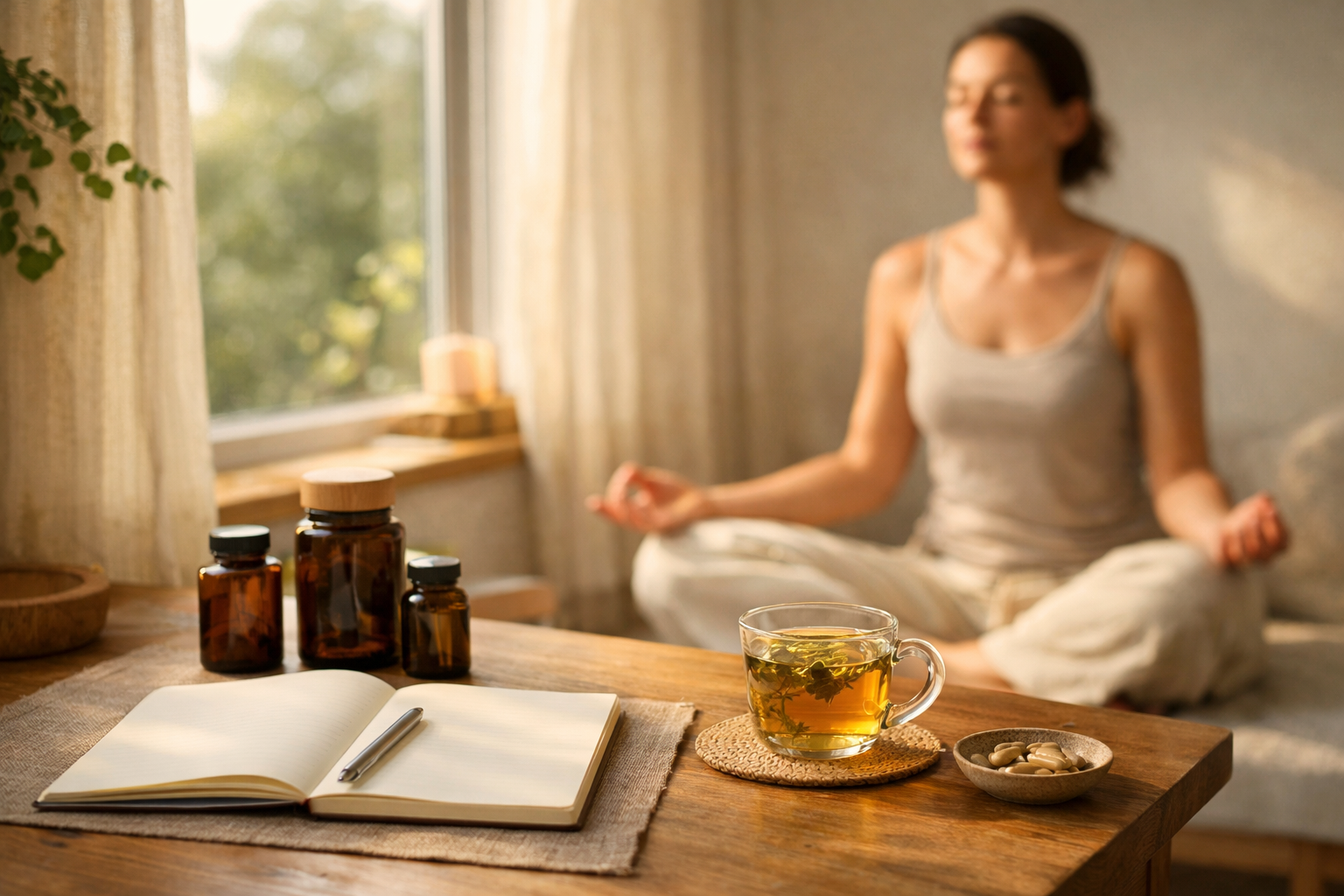
Journalling was also a game-changer for me — not venting journalling, but structured reflection. Writing down the worry, the evidence for and against it, and what I would say to a friend in the same situation helped me spot patterns in my thinking that I genuinely could not see otherwise. If you want somewhere to start, I love the LIFTINSPIRE CO. FINDING BALANCE Mental Health Journal — it has built-in prompts that make it accessible even when your brain feels foggy, and I also keep a simple mindfulness-focused lined notebook beside my bed for evening check-ins.
For moments when you need something more tactile and low-effort, I have found the Allura and Arcia 52 Stress Less Self Care Cards genuinely useful. They are grounding without being cheesy — small, practical prompts for when the spiral starts and you need something to interrupt it quickly.
On the physical side, I also want to mention magnesium — specifically magnesium glycinate — because this comes up a lot in anxiety conversations and there is reasonable evidence behind it. Magnesium plays a role in the nervous system’s stress response, and many people are mildly deficient without knowing it. I use Pure Encapsulations Magnesium Glycinate, which is a high-quality, well-tolerated form, though a budget-friendly alternative I have seen recommended is this 500mg chelated magnesium glycinate supplement. Always check with your GP before starting supplements, especially if you are on any medication.

You Deserve Support — Not Just Reassurance
Here is the thing about health anxiety symptoms that nobody really tells you when you are in the thick of it: reassurance is not the solution. Every time you get reassurance — from a doctor, from a partner, from Dr Google — it provides about twenty minutes of relief before the cycle kicks off again. What actually helps is learning to tolerate the uncertainty, to sit with “I don’t know for certain but I am probably okay” without needing to chase certainty down every rabbit hole.
That is genuinely hard work. And it is work best done with a good therapist alongside you. If you are not sure where to start, the British Association for Counselling and Psychotherapy (BACP) has a free therapist directory at bacp.co.uk, and NHS Talking Therapies is available without a GP referral in most parts of England.
If you want to build your skills while you are waiting for support, The Complete CBT Workbook for Adults is a solid, practical resource that covers anxiety and stress management with short, manageable daily exercises — helpful if you find it hard to commit to long sessions when your brain is already overwhelmed.
When I was going through the worst of my health anxiety, I genuinely believed I was either very ill or completely losing my mind. Neither was true. What was true was that I was exhausted, I was stressed, and my nervous system had essentially got stuck in threat-detection mode. Understanding that changed everything — not overnight, but gradually. And you deserve that same clarity.
You are not broken. You are not being dramatic. And you are absolutely not alone in this. Take it one day at a time, be kind to yourself, and please do reach out for proper support when you are ready. It really does make a difference.
— Lucy x
Related Posts

Anxiety in Men: Why It Looks Different and Gets Dismissed So Often
This post contains affiliate links. As an Amazon Associate I…
Best Supplements for Anxiety in 2025: What Research Says and What I Take Daily
This post contains affiliate links. As an Amazon Associate I…

10 Science-Backed Ways to Reduce Anxiety That Actually Work (I Have Tried Every One)
This post contains affiliate links. As an Amazon Associate I…