Understanding the Restless Mind
Our thoughts never seem to stop moving. Source They jump from one idea to another without warning. This constant mental chatter resembles a monkey swinging through trees. Ancient monks recognized this pattern thousands of years ago.
The wandering mind creates stress in our daily lives. We struggle to focus on important tasks. Our attention scatters across multiple concerns simultaneously. However, ancient meditation techniques offer practical solutions. These time-tested methods help us manage mental chaos effectively.
What I Recommend
If you’re going to sit with monastic practice, a quality meditation cushion makes an enormous difference in your ability to stay present without physical distraction. I’ve watched countless clients struggle through sessions on the floor, only to find that proper support transforms their practice entirely. A good cushion isn’t a luxury—it’s a tool that honors your commitment to showing up.
For those drawn to the monastic tradition of structured sitting, a meditation bench offers a time-tested alternative that many find more natural for longer sessions. The slight forward tilt takes pressure off your knees and ankles while encouraging upright posture—exactly what the ancient practitioners understood about sustainable practice. It’s a small investment that deepens your ability to stay grounded.
A simple flip cube timer helps you hold the monastic discipline of consistent practice without the distraction of checking the clock. There’s something about knowing your session length in advance that quiets the restless part of the mind. I recommend using it to build gradually—even five minutes with intentionality beats twenty scattered ones.
Incense can gently anchor your practice if it resonates with you, creating a sensory marker that signals to your nervous system that this is sacred time. Monasteries have used aromatic practice for centuries, and I’ve found that many modern practitioners find it easier to transition into focus when paired with a familiar scent. Choose something that feels authentic to you—the ritual matters more than the specific fragrance.
If you’re looking to deepen your understanding alongside your practice, Practicing Mindfulness offers practical guidance grounded in both tradition and modern neuroscience. Reading about technique can actually enhance your sitting by building confidence in what you’re doing and why it matters. Sometimes the intellectual understanding helps the intuitive practice settle more fully.
Monks developed systematic approaches to calm restless thoughts. They understood that fighting the mind only creates more turbulence. Instead, they learned to work with mental energy constructively. Their wisdom remains remarkably relevant for modern challenges.
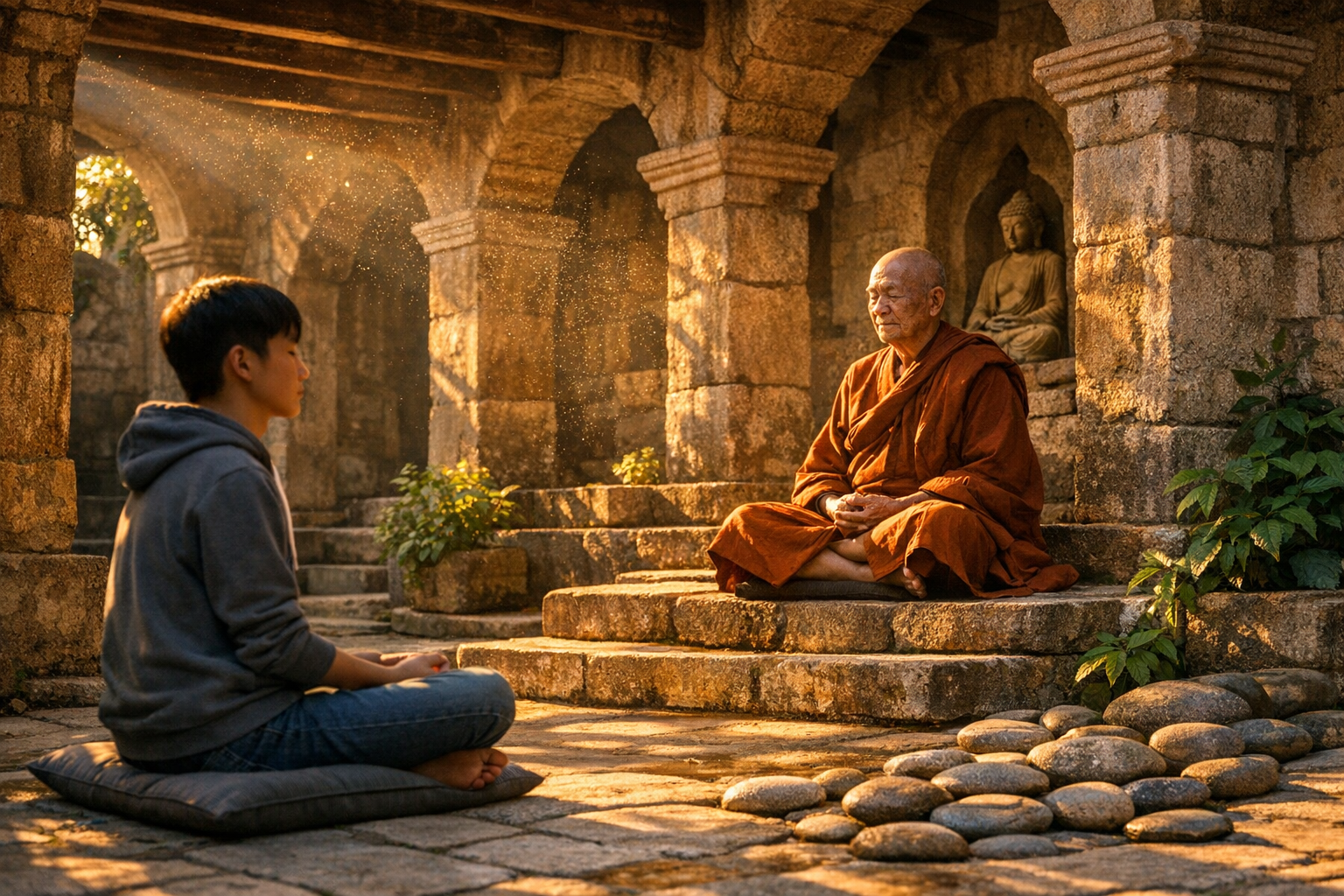
The Monkey Mind Concept
Buddhist teachers use the monkey metaphor deliberately. Monkeys in nature display constant movement and curiosity. They explore everything within reach impulsively. Similarly, our minds grasp at thoughts continuously. We replay past conversations and worry about future events.
This mental pattern isn’t a personal failing. Every human experiences the monkey mind regularly. The untrained mind naturally seeks stimulation and novelty. It resists stillness because movement feels safer. Our ancestors needed this alertness for survival.
Modern life amplifies this natural tendency significantly. Digital devices provide endless stimulation opportunities. Notifications interrupt our focus every few minutes. Consequently, our monkey minds grow more agitated. We lose the ability to rest mentally.
Monastic wisdom teaches acceptance of this reality. We acknowledge the monkey without judgment. This approach differs from forceful suppression techniques. Instead, we learn to channel mental energy productively.
Giving Your Monkey a Task
Monks discovered an elegant solution to mental restlessness. They give the monkey mind a specific job. This technique redirects energy rather than blocking it. The breath becomes the monkey’s primary focus.
Breathing happens automatically throughout our lives. We rarely notice this constant process consciously. However, breath awareness creates a perfect anchor point. The monkey mind receives clear instructions to observe.
Start by noticing your natural breathing rhythm. Don’t force or change anything initially. Simply watch air entering and leaving your body. Your monkey mind now has meaningful work. It monitors this gentle, repetitive process.
This assignment satisfies the mind’s need for activity. The monkey stays engaged without creating chaos. Moreover, breath observation grounds us in present moments. We stop dwelling on past regrets or future anxieties.
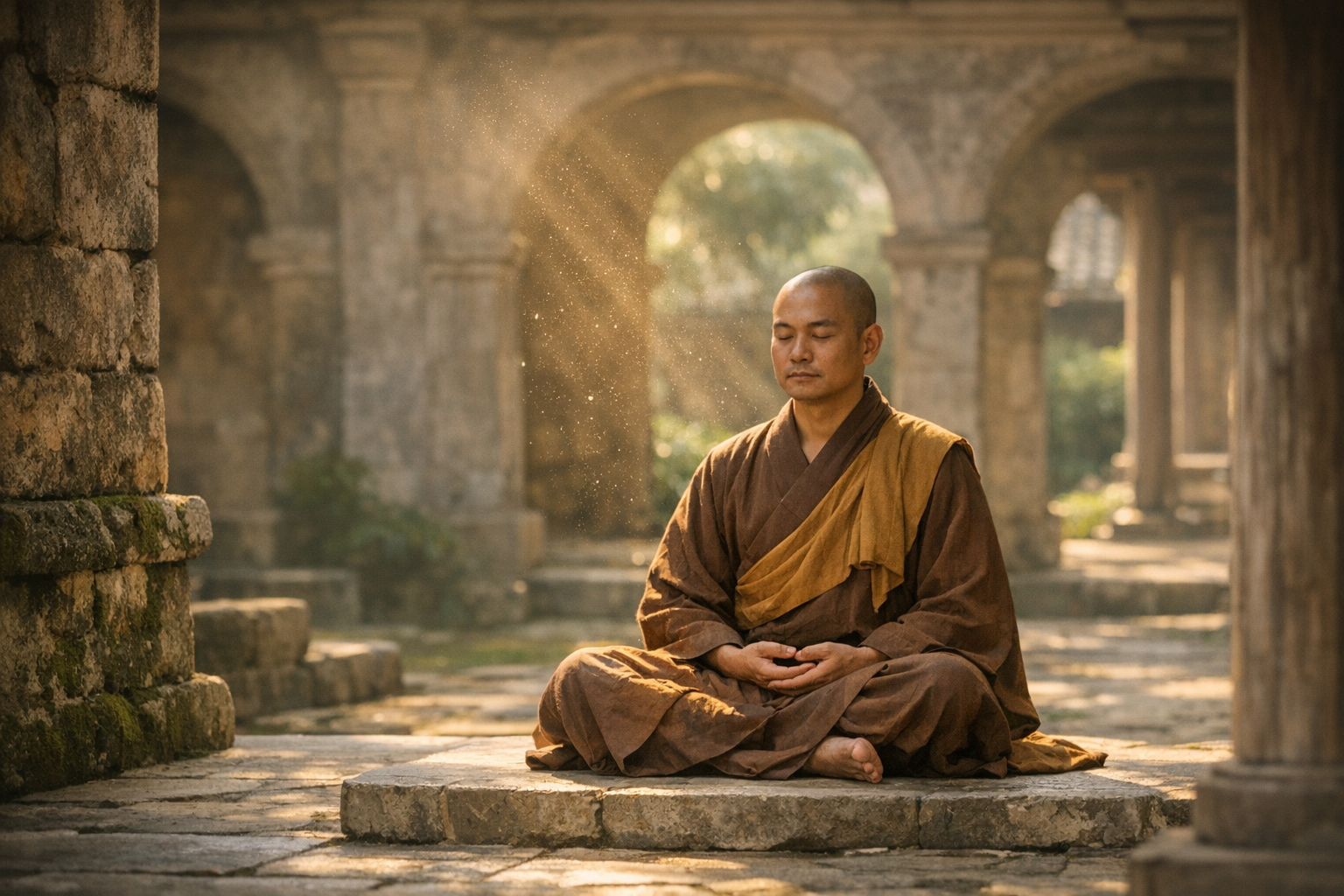
Practical Breath Observation
Focus on specific physical sensations during breathing. Notice coolness as air enters your nostrils. Feel your chest and belly expanding naturally. Observe the slight pause between breaths. These details keep your monkey mind occupied.
Your attention will wander frequently at first. This happens to everyone without exception. When you notice distraction, gently return focus. No frustration or self-criticism is necessary. Simply redirect the monkey back to work.
The breath remains available every single moment. You can practice anywhere without special equipment. This accessibility makes the technique universally practical. Ancient monks chose wisely when selecting this anchor.
Distinguishing Meditation from Distraction
Many people confuse meditation with mere relaxation. They might zone out while watching television. Perhaps they daydream during a boring meeting. However, these states differ fundamentally from true meditation.
Meditation requires present-moment awareness and intention. You actively direct attention toward chosen objects. The mind remains alert despite feeling calm. This combination creates unique mental conditions.
Distraction involves unconscious mental wandering instead. Your awareness scatters without purposeful direction. Time passes without clear memory formation. You might feel rested but lack mental clarity.
Monks emphasize this distinction for good reason. True meditation builds mental strength and awareness. Distraction merely provides temporary escape from stress. The difference affects long-term benefits significantly.
Maintaining Alertness
Meditation posture supports wakeful awareness naturally. Sit with a straight spine and relaxed shoulders. Keep your head balanced comfortably upright. This position promotes alertness while remaining comfortable.
Your eyes can stay open or gently closed. Some traditions prefer a soft downward gaze. This prevents both visual distraction and drowsiness. Experiment to find what works best personally.
If sleepiness occurs during practice, adjust your approach. Perhaps meditate earlier in the day instead. Stand up and walk mindfully for several minutes. These modifications preserve the quality of awareness.

The Power of Short Sessions
Ancient teachers understood human psychology remarkably well. They recommended brief, frequent practice sessions consistently. This approach contradicts modern assumptions about meditation. Many beginners think longer sessions produce better results.
However, short practices prevent mental fatigue and resistance. Your monkey mind cooperates more willingly initially. Five minutes feels manageable rather than overwhelming. You build positive associations with meditation gradually.
Building a Sustainable Practice Through Consistency
Regular meditation sessions create lasting change in your mental landscape. Think of it like watering a plant. Five minutes in the morning, afternoon, and evening produces better results than one marathon session. Moreover, this approach prevents burnout and keeps your practice feeling fresh.
When you meditate multiple times daily, something remarkable happens. Each session acts as a gentle reminder to your nervous system. Your brain begins to recognize these moments of stillness. Furthermore, it starts craving them naturally throughout your day.
The Science Behind Repetition
Consider how you learned to ride a bicycle. You didn’t master it in one long attempt. Instead, repeated short practices built your muscle memory. Similarly, meditation rewires your neural pathways through consistent exposure. Each brief session strengthens these new connections.
Your mind operates like a garden requiring regular tending. Therefore, three 10-minute sessions outperform one 30-minute session. The spacing between practices allows integration. Additionally, your brain processes and solidifies the benefits during these intervals.
Creating Momentum in Daily Life
Momentum builds naturally when you practice frequently. For example, a morning session sets a calm tone. A midday practice recenters you amid chaos. Meanwhile, an evening session helps release accumulated tension. Each touchpoint reinforces your commitment to inner peace.
The beauty of short sessions lies in their accessibility. You can meditate while waiting for coffee to brew. However, you can also practice during lunch breaks or before bed. Consequently, meditation becomes woven into your lifestyle rather than feeling like an obligation.
Monks often practiced for just a few minutes initially. They repeated sessions many times daily instead. This strategy builds sustainable habits without struggle. The cumulative effect surpasses occasional long sessions.
Building Your Practice Schedule
Start with three-minute sessions several times daily. Morning practice sets a positive tone immediately. Midday sessions provide stress relief during work. Evening meditation promotes better sleep quality.
Creating Your Digital Meditation Anchor
Modern technology can serve as your greatest ally in building a meditation practice. Therefore, strategically scheduling phone notifications transforms abstract intentions into concrete actions. For example, set multiple alarms throughout your day at moments when you typically feel stressed. Additionally, label each reminder with encouraging phrases like “Time to breathe” or “Your peaceful pause awaits.”
Consider these effective reminder strategies:
- Morning alerts: Set for immediately after waking, before checking emails
- Midday notifications: Schedule during typical energy slumps around 2-3 PM
- Evening reminders: Place before dinner or your bedtime routine
- Weekend prompts: Adjust timing to match your different schedule patterns
The Science Behind Habit Formation
Consistency operates as the cornerstone of neurological change in your brain. Moreover, research shows that repeating an action for 21 to 66 days creates neural pathways. These pathways make behaviors increasingly automatic over time. Consequently, your brain begins associating specific times with meditation practice.
Furthermore, the brain releases dopamine when you follow through on scheduled activities. This chemical reward system strengthens your commitment naturally. As a result, what once required willpower becomes effortless routine. Your body actually starts craving these moments of stillness.
Anticipation Replaces Resistance
Mental anticipation develops as your practice matures through regular repetition. Initially, you might feel reluctance when your reminder sounds. However, after several weeks, something remarkable happens in your consciousness. Your mind starts looking forward to these designated peaceful intervals.
For instance, monks describe this phenomenon as “the body remembering.” Meanwhile, your nervous system learns to prepare itself before the actual practice begins. Therefore, you may notice yourself naturally slowing down minutes before your scheduled time. In contrast to early resistance, you experience genuine eagerness.
The Familiarity Factor
Familiarity dismantles the psychological barriers that initially block consistent practice. Moreover, the unknown always triggers more anxiety than the known. Consequently, each meditation session reduces the mystery surrounding the practice. Additionally, you develop confidence in your ability to sit quietly.
Your mind recognizes the pattern:
- Reminder sounds
- You pause current activities
- You assume your meditation posture
- Peace follows naturally
- You return refreshed
Furthermore, this predictable sequence becomes deeply comforting to your psyche. As a result, meditation transforms from an intimidating challenge into a welcoming refuge.
Gradually extend session length as comfort develops. Add one minute every few weeks naturally. Listen to your experience without forcing progress. Some days require shorter sessions than others.
Integrating Wisdom into Daily Life
Monastic techniques extend beyond formal sitting practice. Monks apply mindful awareness throughout daily activities. Eating, walking, and working become meditation opportunities. This integration transforms ordinary moments into practice.
The Anchor in the Storm
Your breath serves as a portable sanctuary. It is always present, regardless of external circumstances. Therefore, it is the most reliable tool for grounding yourself. When the world feels chaotic, you must turn inward. You do not need a meditation cushion or silence. Instead, you simply need to shift your attention.
Focus intensely on the physical sensation of air entering your nostrils. Feel your chest expand and contract. Consequently, your mind cannot focus on the stressful narrative. The brain cannot panic and observe the breath simultaneously. Thus, you short-circuit the stress response.
Breaking the Reaction Loop
Most people live in a state of constant reaction. A trigger occurs, and an emotion flares instantly. However, conscious breathing disrupts this automatic chain. It acts as a wedge in the machinery of your mind.
For example, imagine someone insults you. Your instinct is to defend yourself immediately. But, if you take one conscious breath, you create a gap. In this gap, you become a witness rather than a victim. You see the anger, yet you do not become it. As a result, you maintain your dignity and composure.
Steps for Immediate Practice
You can apply this technique anywhere. Furthermore, it is invisible to those around you. Follow this sequence when tension rises:
- Stop: Freeze your physical movements for a moment.
- Drop: Move your awareness from your racing thoughts to your belly.
- Breathe: Take three deep, slow inhalations.
- Observe: Notice the physical heat of anger or the tightness of anxiety.
- Choose: Decide how to proceed with wisdom, not impulse.
Cultivating True Freedom
Real freedom is not about changing your environment. Rather, it is about mastering your internal state. The breath is the key to this mastery. Moreover, practicing this daily strengthens your mental resilience.
Small irritations are perfect training grounds. For instance, use traffic jams or long lines as practice opportunities. If you can breathe through small annoyances, you prepare for major crises. Eventually, this pause becomes your default state. You move from being a reactive creature to a conscious being. Ultimately, this is the path to lasting peace.
Use transition moments for brief awareness practices. Pause mindfully before starting your car or computer. Take three conscious breaths before important meetings. These micro-practices accumulate significant benefits over time.
The monkey mind never disappears completely, and that’s perfectly acceptable. Instead, you develop a different relationship with thoughts. They lose their power to control your actions. You become the observer rather than the victim.
Workplace Applications
Modern work environments challenge our mental peace constantly. Emails demand immediate attention throughout the day. Meetings interrupt deep focus regularly. Nevertheless, monastic wisdom applies beautifully here.
The Power of Micro-Meditation Breaks
Intentional breathing pauses serve as powerful anchors throughout your busy schedule. Instead of rushing from one task to another, create a deliberate boundary. These transitions matter more than most people realize. Furthermore, the simple act of stopping builds awareness of your mental state.
When you complete an email, finish a meeting, or close a project file, pause. Moreover, this single minute becomes sacred space in your day. The practice doesn’t require special equipment or a quiet room. However, it does demand your commitment to prioritize mental clarity.
How to Practice Breath Awareness Effectively
Begin by gently lowering your eyelids to minimize visual distractions. Additionally, place one hand on your abdomen to feel the breath’s movement. Notice the cool air entering through your nostrils on the inhale. Then observe the warm air flowing out on the exhale. Count each complete cycle: inhale and exhale equals one breath.
The first breath often feels shallow or rushed. Therefore, don’t judge its quality. Your second breath naturally deepens as your nervous system begins responding. By the third breath, most practitioners notice a subtle shift in their awareness. Consequently, tension in your shoulders or jaw starts releasing without conscious effort.
The Science Behind Strategic Pauses
Stress hormones accumulate when you move continuously between demanding tasks. For example, cortisol levels rise with each deadline and decision. Meanwhile, your body never receives the signal that danger has passed. This chronic activation depletes your mental resources faster than you realize.
However, even brief meditation interrupts this stress cascade. Research shows that conscious breathing activates your parasympathetic nervous system. As a result, your heart rate decreases and blood pressure stabilizes. Furthermore, these physiological changes happen within 60 seconds of focused breathing.
Productivity Gains Through Mindful Interruption
Many professionals resist breaks because they fear losing momentum. In contrast, neuroscience reveals the opposite effect. Your brain processes and consolidates information during rest periods. Therefore, these pauses actually enhance your cognitive performance.
Additionally, decision fatigue decreases when you incorporate regular resets. Each breath break clears your mental workspace, similar to closing browser tabs. Moreover, you return to the next task with renewed focus and creativity. Studies indicate that workers who take strategic pauses complete tasks 15-20% faster than those who push through continuously.
Building Your Practice Into Daily Routines
Start by identifying three natural transition points in your workday. For example, mark the moments between checking email, attending meetings, and starting focused work. Additionally, set a gentle reminder on your phone or computer for the first week.
The key is consistency rather than perfection. However, even practicing twice daily creates measurable benefits. Furthermore, you’ll begin noticing when you need these breaks without external reminders. Your body becomes its own wisdom teacher over time.
Practice single-tasking instead of constant multitasking. Give your monkey mind one clear job only. Complete that task before moving to another. This approach mirrors traditional monastic work practices.
Overcoming Common Obstacles
Embarking on the path of inner stillness rarely follows a straight line. Initially, you may expect immediate peace and tranquility. However, the reality of the practice is often quite different. The body and mind frequently rebel against discipline. Therefore, do not be discouraged by early struggles. These obstacles are not barriers to the path; they are the path itself. In fact, every master has faced these exact same hurdles.
Understanding Physical Resistance
The body often holds tension that we ignore during daily activity. Consequently, when you sit still, this tension rises to the surface. You might experience various physical sensations that test your resolve:
- Numbness: A loss of feeling in the extremities.
- Aching: Dull pain in the knees, hips, or lower back.
- Itching: Sudden, shifting sensations on the skin.
For example, your legs may scream for you to move after only ten minutes. Nevertheless, this discomfort is a valuable teacher. It trains your mind to remain equanimous despite unpleasant stimuli. Instead of moving immediately, try to observe the sensation objectively.
The Illusion of Mental Chaos
Furthermore, the mind can seem terrifyingly loud when you try to quiet it. Many students report that their thoughts multiply after starting meditation. However, this is a common illusion. Your mind is not actually becoming busier. Instead, your awareness is finally becoming sharp enough to see the chaos.
Previously, you were simply too distracted to notice the constant internal chatter. Thus, seeing the “monkey mind” clearly is actually a sign of progress. It proves you are stepping out of the stream of thought and onto the bank. Consequently, you become the observer rather than the participant.
Cultivating Patience and Acceptance
Ultimately, the key to overcoming these challenges is gentle perseverance. Rather than fighting the discomfort or the noise, simply acknowledge them. You can use specific techniques to stay grounded during difficult sessions:
- Anchor your focus: Return gently to the sensation of the breath.
- Label the distraction: Note “thinking” or “aching” silently.
- Release judgment: Do not criticize yourself for wandering.
As a result, the resistance will eventually lose its power over you. Finally, you will find the stillness waiting beneath the noise. Consistency is far more important than a “perfect” experience.
Physical discomfort teaches important lessons about acceptance. Notice sensations without immediately adjusting your position. Observe the urge to move before acting. This builds patience and mental strength gradually.
Understanding the Paradox of Mental Noise
When beginners first sit down to meditate, they often feel overwhelmed. Their minds seem louder than ever before. Thoughts cascade relentlessly, one after another. However, this experience is actually a positive sign. It demonstrates that your meditation practice is working exactly as intended.
The increased mental chatter you notice isn’t new. These thoughts were always present in your mind. Previously, you were too distracted to observe them clearly. Furthermore, your daily activities masked this constant internal dialogue. Meditation simply creates the space for you to witness what was already there.
The Awakening of Awareness
Think of your mind as a snow globe. Throughout your day, you shake it constantly with activities and distractions. Consequently, you never see the particles swirling inside. Moreover, the constant motion becomes your normal state. When you finally set it down during meditation, you suddenly notice everything floating around.
This heightened awareness is progress, not failure. For example, imagine living near train tracks your whole life. Eventually, you stop hearing the trains pass. Similarly, your mind’s chatter became background noise you learned to ignore. Meditation removes that filter, allowing you to hear clearly again.
The Monkey Mind Revealed
Buddhist monks use the term “monkey mind” to describe our restless thoughts. This monkey jumps from branch to branch endlessly. Additionally, it chatters without pause, demanding constant attention. The crucial insight is this: the monkey was always this active.
Before meditation, you were simply unaware of its behavior. Therefore, discovering this chaos feels shocking at first. Meanwhile, experienced practitioners understand this revelation marks genuine progress. As a result, they celebrate rather than discourage this awareness.
Measuring True Progress
Many meditators mistakenly believe success means achieving complete mental silence. In contrast, real progress involves recognizing thoughts without becoming them. Furthermore, it means observing the monkey without joining its dance. Each time you notice your mind wandering, you’ve actually succeeded.
Consider these signs of genuine advancement:
- Catching yourself mid-thought more frequently
- Recognizing patterns in your mental chatter
- Observing thoughts without immediate reaction
- Moreover, returning to your breath more quickly
- Additionally, feeling less frustrated by mental noise
The monk who has meditated for decades still experiences thoughts. However, their relationship with those thoughts has transformed completely. Consequently, they remain undisturbed by the monkey’s performance.
Embracing the Discovery
This realization should bring relief rather than discouragement. Your meditation practice hasn’t made things worse. Instead, you’ve simply turned on a light in a previously dark room. Therefore, you can now see what needs attention.
Furthermore, this awareness extends beyond your meditation cushion. Throughout your day, you’ll start noticing habitual thought patterns. For example, you might catch yourself worrying unnecessarily about future events. As a result, you gain the power to choose different responses.
The journey continues from here. Meanwhile, remember that noticing is the practice itself.
Some days feel easier than others naturally. Don’t judge your practice by individual sessions. Look at long-term patterns and development instead. Progress happens gradually through consistent effort.
Working with Resistance
Your mind will create excuses to skip practice. “I’m too busy today” becomes a familiar refrain. “I’ll meditate tomorrow when I’m less tired.” Recognize these as monkey mind tricks.
True discipline begins exactly where your natural enthusiasm ends. Motivation is merely a fleeting emotion, much like the changing weather. Therefore, relying on it is a mistake for any serious practitioner. A monk does not meditate simply because they feel inspired to do so. Instead, they sit because it is time to sit. Consequently, this unwavering routine builds a foundation of spiritual resilience.
You must treat the meditation cushion like eating, sleeping, or brushing your teeth. It is a non-negotiable part of your existence. Furthermore, the decision to practice is made beforehand, not in the moment. If you wait until you feel ready, you may never begin. Consistency is the water that eventually cuts through the hardest rock.
The Gift of Resistance
When your mind feels chaotic, you might feel a strong urge to skip your practice. However, this is exactly when you need to sit the most. Resistance is not a sign to stop; it is actually a teacher. For example, sitting through intense boredom teaches you deep patience. Meanwhile, sitting through anxiety teaches you radical acceptance.
Easy sessions feel pleasant, but they often only confirm what you already know. In contrast, the hard sessions reveal the hidden, sticky patterns of your ego. Friction creates the heat necessary for transformation. Thus, you should welcome the struggle as a vital part of the path.
Consider these common obstacles as opportunities for growth:
- Fatigue: Learn to observe the heaviness without falling asleep.
- Restlessness: Watch the energy move without acting on it.
- Doubt: Notice the questioning mind without believing its stories.
Beyond Perfect Conditions
Many beginners make the error of waiting for absolute silence to begin. They believe a calm environment is necessary to achieve a calm mind. Yet, this is a fundamental misunderstanding of the practice. Real meditation happens in the midst of life’s noise, not away from it.
For instance, a barking dog or a loud siren is not a distraction. It is simply a sound arising and passing away in consciousness. Therefore, you must stop fighting your environment. As a result, you learn to find stillness within the storm rather than seeking an escape.
Ultimately, life will rarely provide you with a pristine sanctuary. If you can only meditate in a cave, your peace is fragile. However, if you can meditate in a market, your peace is unshakeable. This adaptability is the true fruit of your labor.
Celebrate small victories along your journey consistently. Perhaps you noticed distraction sooner than yesterday. Maybe you completed your planned session despite resistance. These moments deserve recognition and appreciation.
Creating Sustainable Practice
Monasteries were never just simple buildings. Rather, they were architectural machines designed specifically for mindfulness. Every stone, corridor, and window was placed to cultivate silence. Consequently, monks did not rely solely on internal willpower. The environment itself pulled them into a deep state of awareness. However, modern homes are often filled with digital noise and clutter. Therefore, you must intentionally engineer your surroundings to mimic that ancient support.
Reducing Friction to Practice
Willpower is a limited resource that fatigues easily. As a result, relying on it to start your practice often leads to failure. Instead, focus on removing physical barriers. If you must dig through a closet for a cushion, you likely won’t meditate. Thus, the path of least resistance is essential.
Make your meditation zone permanently accessible. For example, leave your zafu (cushion) on the floor. Keep a shawl draped over your favorite chair. This visual cue acts as a constant invitation. Furthermore, it signals to your brain that this activity is a priority.
Designing Your Sacred Space
You do not need an entire room dedicated to silence. A small, quiet corner is sufficient for profound work. First, clear away all unrelated physical clutter. External chaos often leads to internal agitation. Next, consider the sensory inputs of your chosen spot.
Use these elements to anchor your attention:
- Lighting: Use soft lamps or natural light to induce calm.
- Scent: Burn incense or a candle to trigger muscle memory.
- Sound: Use a small bell or white noise to mark the beginning.
Additionally, these sensory details create a Pavlovian response. Eventually, your body will relax the moment you sit down. This automatic response is the secret to consistency. Therefore, treat your space with the same reverence a monk treats a temple.
A dedicated corner works better than elaborate setups. Place a cushion where you’ll see it daily. This visual reminder prompts consistent practice naturally. Simplicity reduces barriers to starting sessions.
Building Your Meditation Community
Connecting with fellow meditators transforms your practice in meaningful ways. Local meditation centers often host weekly group sessions. These gatherings create accountability and structure. Additionally, many temples and wellness studios offer beginner-friendly circles. You’ll discover people from diverse backgrounds united by one goal.
Online platforms expand your options considerably. For example, Reddit communities like r/Meditation host thousands of active members. Facebook groups connect practitioners across time zones. Moreover, apps like Insight Timer feature live group meditations daily. You can join sessions at any hour that suits your schedule.
The Power of Shared Practice
Furthermore, practicing alongside others generates collective energy. This phenomenon, called sangha in Buddhist tradition, amplifies individual effort. You’ll notice deeper focus when meditating in groups. The shared silence becomes almost tangible. Consequently, many practitioners report breakthrough experiences during group sessions.
Meanwhile, accountability partners help maintain consistency. You can arrange weekly check-ins with meditation buddies. These conversations keep your practice alive during challenging periods. As a result, commitment rates increase by nearly 60% among group participants.
Learning Through Community Exchange
Experienced practitioners offer invaluable guidance through community connections. They share techniques that worked for specific challenges. For instance, someone might explain how they overcame restlessness. Another person describes their approach to morning meditation routines. Therefore, you gain practical wisdom beyond textbook knowledge.
However, remember that everyone’s journey differs. What works for others may need adaptation. Nevertheless, hearing diverse perspectives enriches your understanding. In contrast to solo practice, communities expose you to multiple meditation styles. You might discover approaches you never considered exploring.
Creating Sustainable Practice Habits
Moreover, social bonds make meditation feel less like a chore. You develop friendships centered on growth and mindfulness. These relationships extend beyond meditation sessions. Consequently, your entire social circle begins supporting your spiritual development. The journey stops feeling isolating or overwhelming.
Additionally, communities celebrate milestones together. Completing a 30-day challenge becomes a shared victory. Group members acknowledge your progress and dedication. This recognition fuels motivation during plateaus. As a result, long-term sustainability improves dramatically compared to solitary practice.
Remember that perfection isn’t the goal here. Monks spent lifetimes developing their meditation skills. Your practice will evolve gradually over years. Each session contributes to long-term transformation regardless of immediate results.
Conclusion
Ancient Tools for Modern Stress
Ancient traditions provide timeless solutions for today’s stress. Monks spent centuries studying the nuances of the human mind. Consequently, their insights are surprisingly relevant to our digital lives. We often feel overwhelmed by constant notifications and demands. However, monastic techniques cut through this noise effectively. These practices are not just for spiritual seekers. In fact, they offer practical utility for anyone seeking clarity.
We do not need to live in a monastery to benefit. Instead, we can apply these principles to our daily routines. The goal is not to escape reality. Rather, it is to navigate reality with greater skill and patience. Therefore, ancient wisdom becomes a toolkit for modern survival.
Understanding the “Monkey Mind”
The “monkey mind” is a powerful metaphor for internal chaos. Imagine a wild monkey swinging rapidly from branch to branch. Similarly, our attention shifts uncontrollably between worries and distractions. One moment we plan dinner; the next, we regret an email. This constant motion creates anxiety and mental fatigue.
However, monks teach us that this is natural behavior. The mind is designed to think, just as eyes are designed to see. Therefore, we shouldn’t judge ourselves for having busy thoughts. Fighting the mind often leads to frustration. In contrast, accepting this restlessness allows us to detach from it. We learn to watch the monkey without becoming the monkey.
The Power of Assigning Mental Tasks
Fighting the mind usually creates more tension. Resistance often makes the intrusive thoughts louder and more persistent. A better approach involves assigning the mind a specific task. This technique channels mental energy into a productive stream. By giving the “monkey” a job, you keep it occupied.
Try these specific mental tasks to focus energy:
- Counting: Count each exhale up to ten, then start over.
- Visualization: Picture a calm, still lake with perfect clarity.
- Scanning: Systematically notice tension in specific body parts.
For example, you might focus intensely on the sensation of your hands. Suddenly, the chaotic mind becomes a helpful assistant. It focuses on the work rather than creating distraction. Consequently, the noise in your head begins to fade.
Using the Breath as an Anchor
Finally, the breath serves as the ultimate portable tool. You cannot leave your breath behind. Thus, it remains an accessible anchor in any situation. Whether you are in traffic or a stressful meeting, it is there. Simply observing the inhale and exhale grounds you immediately.
Moreover, this practice physically calms the nervous system. It bridges the gap between the body and the mind. You do not need to change your breathing pattern. Instead, simply notice the air moving through your nostrils. As a result, you return to the present moment instantly. This simple act breaks the cycle of stress.
Short, frequent sessions build sustainable practice habits effectively. We learn to distinguish true meditation from mere distraction. These ancient techniques integrate beautifully into contemporary life. They don’t require us to abandon modern responsibilities.
The path forward involves patience and consistent effort. Start with just a few minutes daily today. Trust the cumulative power of regular practice. Your monkey mind will gradually become a cooperative companion rather than a chaotic distraction. Ancient monks discovered timeless truths about human consciousness that remain remarkably relevant for our fast-paced world.
*As an Amazon Associate, I earn from qualifying purchases.
Related Posts
Timeless Wisdom: Learning the Art of Meditation from Monastic Masters
The Myth of External Silence True tranquility is rarely found…

Timeless Wisdom: A Monk’s Guide to Finding Inner Peace Through Meditation
Understanding the Foundation of Mental Clarity Many people struggle to…